Knowledge
How To Become the Self-Funder Care Provider of Choice

Knowledge
Sector Insights
26 July 2026

Alisdair Straughan
Every care operator I speak to says a version of this. They know the landscape has changed. They know the private paying family is the audience that matters now. Underneath the website refresh and the new brochure and the Facebook page, they suspect none of it is really landing with the person they most need to reach. They are usually right.
For decades, a good chunk of the sector ran on council placements. The local authority sent people your way, the beds filled and marketing was a nice to have rather than the thing that kept the lights on.
That arrangement is draining away as council budgets tighten and providers that never had to win a family in their lives are suddenly having to learn how.
At the same time, the self-funder has become the most valuable audience in the sector by some distance. Self-funded residents now account for around 37% of all care home residents in England, and the proportion has been climbing year on year. Look at it by money rather than headcount and the picture is starker still. Recent market analysis puts self-funders at 45% of demand volume and 55% of total value of the UK care home market, which reached £27bn.
In plain terms, fewer than half the residents are generating more than half the money. That is the audience every operator now needs, and it is the audience most care marketing is worst at reaching.
Most care providers still do this because it feels like good marketing: you take the thing you are proudest of, the refurbished lounge, the garden, the award on the wall and you put it front and centre. The reasoning seems sound: show people how lovely it is and they will want to come.
The problem is that no daughter lying awake at midnight has ever thought "what mum really needs is a beautifully furnished lounge". She is thinking about something else entirely and she is thinking about it on her phone, at 1am, three weeks before she ever picks up a telephone to call you.
We know this because the research on how families actually choose is fairly blunt about it. A study published this year found that only 19% of families said they use inspection reports such as the CQC when researching providers and when it came to the final decision only around 11% said inspection reports were among the most important factors.
So much for the rational buyer weighing the evidence.
Instead, reputation was the single most important factor influencing provider choice at 30%, ahead of cost at 25%, staff experience at 24% and location. The same researchers put it neatly: "the factors shaping care decisions are led more by emotion than by formal frameworks, and families enter the system less informed than we allow for."
Read that back and the implication is uncomfortable for a lot of care marketing. The family is not comparing your facilities against the home down the road on a spreadsheet, they are trying to work out whether they can trust you with the person they love and they are doing most of that work before you even know they exist.
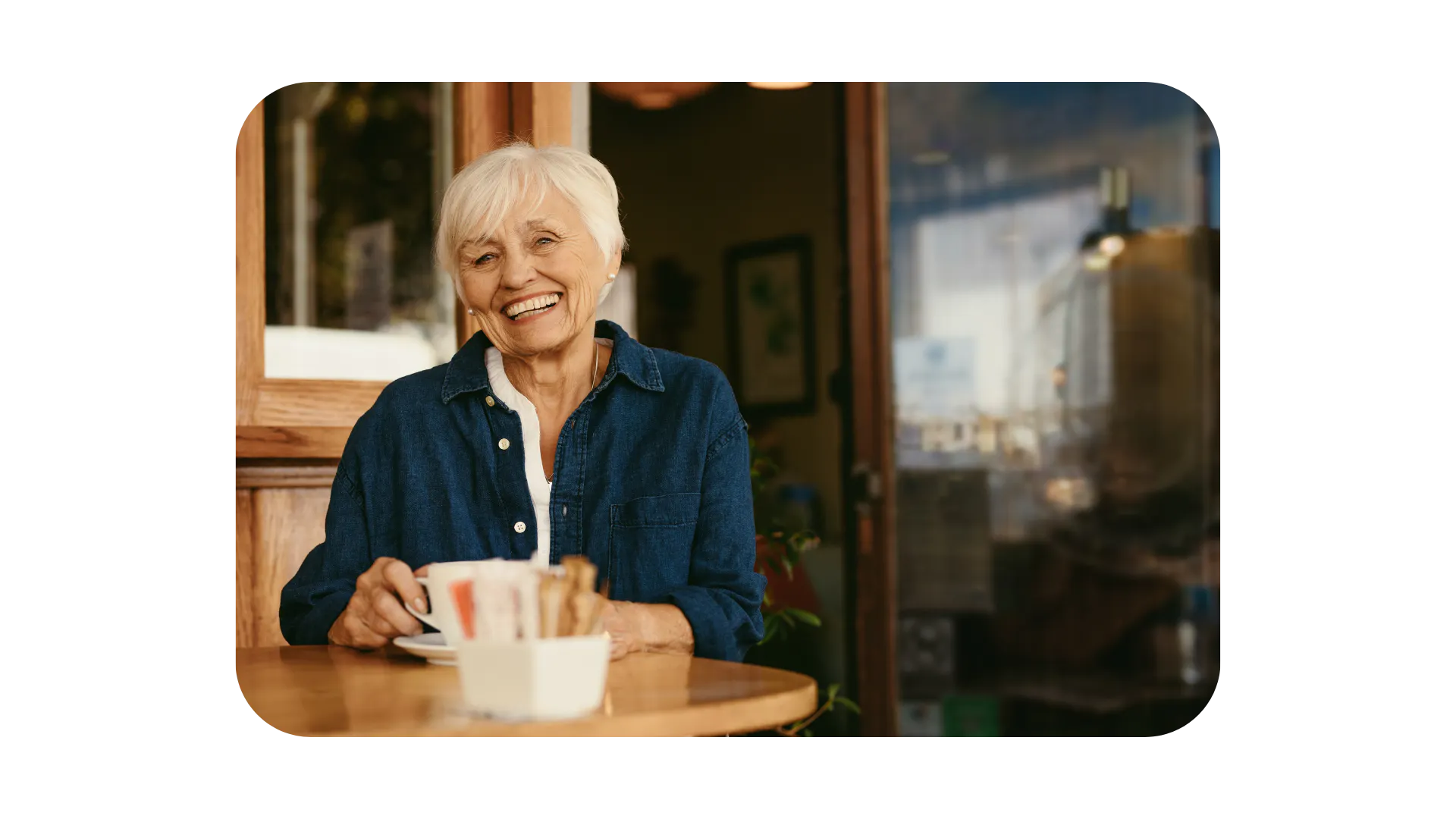
Human-shaped marketing works the other way round from most of what the sector does. Rather than starting with the channel or the feature and hoping it finds the right person, it starts with the person and works out what they need to hear, then puts it exactly where they are already looking.
For the self-funder, the journey is not one feeling, it is a sequence of them and each one is a moment where a home either connects or gets skipped. In our experience mapping this audience, the same emotional beats come up again and again.
Guilt. A daughter who once promised her mum she would never let it come to this. She does not need to hear that your rooms are lovely. She needs to hear that choosing a good home is not giving up on someone and that done for the right reasons it is one of the most caring things a family can do. Interestingly, the American care sector has clocked this too. One provider's blog noted that "moving a parent into care creates a whirlwind of family discussions where guilt mixes with relief in ways no website mentions". That gap, the feeling no website mentions, is the whole opportunity.
The worry of getting it wrong. The self-funder has no placement team double-checking the decision, no safety net. They are weighing whether they can live with the choice afterwards and that worry sits under everything, making them hesitate and second-guess. The home that answers it directly is the home they stop worrying about.
The reluctance to admit they need you at all. A good part of this audience is not ready. The husband telling everyone he is managing when he is running on empty. The woman who would happily tour a retirement village but bristles at the words care home. Ask them to make the biggest decision of their life and they will say no. Offer a fortnight of respite or a look round with no pressure, and the door opens.
Control. And then there is the self-directed buyer, the person choosing for themselves before anyone has to choose for them. She is not in a crisis, she is simply wanting to avoid one. She is not looking for care, she is looking for a life she would actually choose while she can still enjoy it. A proper lounge, decent food and people she would want a drink with. Show her a last resort and you lose her, but show her a life on her own terms and you win her.
None of this is theory that lives in a strategy document. The point of mapping the feelings is to act on them, in the specific channels where this audience actually spends its time.
Self-funders find you through search and word of mouth, not a referral team and the search happens late, privately and emotionally. That is where the mapped feelings need to show up. The article she finds at 11pm answers the question she is too worried to ask out loud. The Google result meets the worry rather than listing the amenities. The social post that stops her scrolling speaks to the guilt rather than the garden.
On the review front, the evidence is unambiguous and it matters more in this sector than almost any other. As one industry analysis put it, "reviews carry more emotional weight in care than almost any other industry, because families are handing over someone vulnerable, and they answer the questions families never ask out loud". A steady flow of genuine reviews is not vanity, it is the trust infrastructure the self-funder leans on hardest.
The thread running through all of it is that the family has already started forming a view of you before you hear a word from them. The trust is built, or lost, in the search results and the reviews and the article, long before the phone rings. Get that right and the enquiry that eventually lands is warmer, further down the journey and far more likely to convert.
The self-funder is the most valuable audience in the sector and they choose with their gut, in private, online, weeks before they make contact. Most care marketing is still talking about the building to a person who is really asking whether they can trust you with their mum. Close that gap, answer the feeling rather than showing off the feature and you become the provider of choice for the families paying for their own care.
Which brings us back to you, the operator. If you think your marketing is not quite speaking to the right person, then it probably isn't. The good news is that the fix is not a bigger budget or a flashier website. It is knowing exactly what that family is feeling at each stage of their journey and having the discipline to meet it.
That knowledge is what our diagnostic process, Edge, is built to produce. We have mapped this audience in depth and we would happily show you what it does for a provider like you.
In the meantime, here's a 'lite' version that gives you a flavour of what Edge produces. Click Here
If you have any questions or what to know more. Please get in touch.
Stay Sharp
Straight to your inbox.